Sales Strategy Guide: 7 Proven Steps to Close More Deals in December 2025
Most sales teams don’t lose deals because their reps aren’t trying; they lose because the work isn’t pointed at the right accounts, the right message, or the right moment. When your pipeline is built on scattered tactics and a CRM full of half-qualified names, forecasting turns into guesswork and the “end-of-quarter push” becomes the plan. A real sales strategy gives your team a clear target, a repeatable way to create and advance opportunities, and a playbook for every stage from first touch to close. This guide walks through seven steps to build that structure fast, including how some teams use a sales enablement workflow to keep goals, training, and execution connected inside the tools reps already use.
TLDR:
Set concrete revenue goals and track leading indicators like pipeline coverage and win rate weekly.
Identify the likely 6-10 stakeholders involved in B2B buying committees early in the sales process to anticipate each role’s concerns.
Combine inbound, outbound, consultative, and account-based strategies based on your deal size.
Deliver sales training in short, frequent sessions since reps forget 70% of information within a week.
Use multi-channel outreach across LinkedIn, email, and phone to increase lead generation by 30%.
Define Your Sales Goals and Key Performance Indicators
Start by defining concrete revenue goals and breaking them down by quarter, product line, and sales rep. Your targets should ladder up to company objectives like market expansion, customer retention, or new product adoption.
Focus on leading indicators that predict revenue: qualified pipeline coverage, average deal size, sales cycle length, and win rate. These measurements provide early warning signs when performance drifts off track.

Organizations with clearly defined goals are 59.9% more likely to meet or exceed revenue targets, while 91% report stable or improving win rates.
Review your goals weekly with your team. When targets are specific, measurable, and constantly reinforced, you create accountability that drives consistent performance.
Build Detailed Ideal Customer Profiles and Buyer Personas
Your ideal customer profile should document firmographic data, pain points, buying triggers, and budget authority. Go deeper than company size and industry to understand what causes them to seek solutions and what outcomes they measure success by.
Map the full buying committee early. B2B purchasing decisions typically involve 6 to 10 stakeholders, each with different priorities and concerns. Identify who champions your solution, who controls the budget, who confirms technical fit, and who has veto power.
Build personas that capture how each role researches, assesses, and supports purchases. 85% of buyers have largely set their purchase requirements before contacting a seller. Your messaging must align with their self-guided research process.
Document common objections by role, preferred content formats, and which channels they use to gather information. When you understand the buying committee’s dynamics early in the sales process, you can tailor outreach to tackle each stakeholder's concerns and accelerate consensus.
Choose the Right Sales Strategy Types for Your Business
Most sales teams combine multiple strategies based on deal size, sales cycle length, and customer acquisition costs.
Inbound Sales Strategy
Inbound attracts buyers already researching solutions. You create content, optimize for search, and nurture leads who express interest. This works well with strong marketing resources and longer consideration cycles.
Outbound Sales Strategy
Outbound involves proactive prospecting through cold calls, emails, and social selling. 81% of B2B companies actively pursue outbound lead generation, while 70% call prospecting integral to their success. It delivers faster results with clear targeting and dedicated SDR capacity.
Consultative Sales Strategy
Consultative selling focuses on discovery and problem-solving. Reps diagnose needs, recommend tailored solutions, and build trust through expertise. This fits complex products where customization drives value.
Account-Based Sales Strategy
Account-based concentrates resources on high-value accounts. Sales and marketing coordinate personalized campaigns for each target company, engaging multiple stakeholders simultaneously. This approach is most effective when personalized, multi-stakeholder engagement is worth the effort.
Develop a Sales Training and Enablement Program
One-time training events fail because B2B sales reps forget 70% of information within a week. Your enablement program needs continuous reinforcement.
Build training around product knowledge, competitive positioning, objection handling, and discovery frameworks. Deliver lessons in short, frequent sessions that fit into daily workflows instead of all-day workshops that pull reps off the floor.
Use real deal scenarios and role-playing to practice messaging before high-stakes conversations. Record calls and review them with coaching feedback that reinforces what works and corrects what doesn't.
Measure effectiveness through behavior change, not completion rates. Track whether reps apply new techniques in discovery calls, handle objections more effectively, and improve win rates after training.
Implement a Multi-Channel Lead Generation Approach
Email-only campaigns generate fewer leads year-over-year, while B2B buyers prefer social media as their first touchpoint. Single-channel strategies leave you vulnerable to algorithm changes and audience burnout.
Coordinate outreach across LinkedIn, email, phone, and content syndication. When prospects encounter your message on multiple channels, each interaction builds recognition and trust.
Sequence your channels deliberately:
Launch with social engagement to warm prospects before email outreach
Follow email opens with phone calls within 24-48 hours
Deploy retargeting for website visitors who haven't responded
Monitor which channel combinations drive conversions. Some prospects respond to calls immediately, while others need several email touches. Test 7-14 day cadences that alternate between channels, then adjust based on response rates and deal velocity.
Optimize Your Sales Process and Pipeline Management
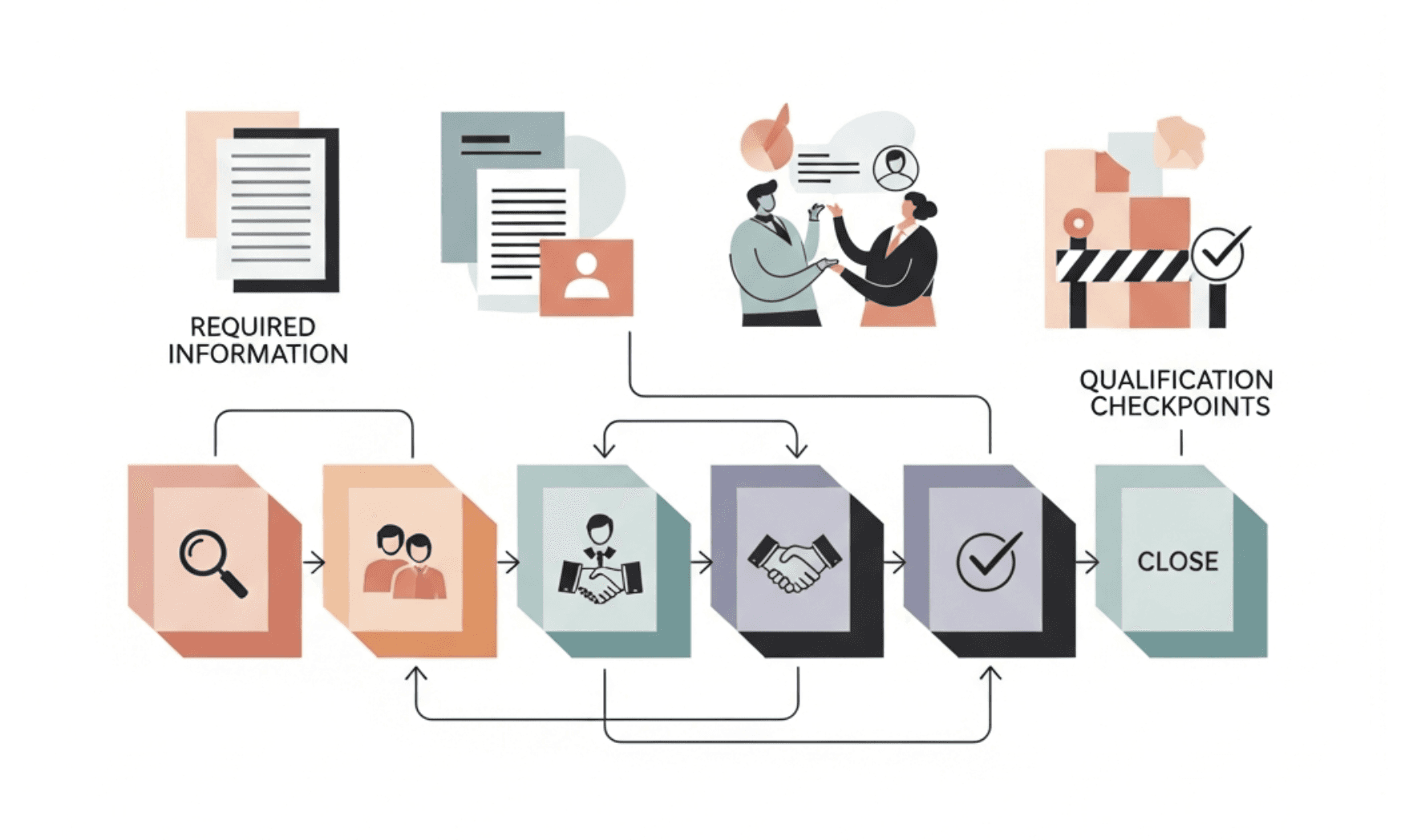
Define 5-7 distinct stages with objective exit criteria. Specify required information, stakeholder engagement, and qualification checkpoints before deals advance. Without clear gates, reps push unqualified opportunities forward and distort forecasts.
Some revenue teams now face sales cycles lasting 1 to 2 quarters, making pipeline velocity critical. Calculate how long deals remain in each stage and pinpoint bottlenecks. When deals stall in technical evaluation or legal review, bring in executive sponsors or procurement support earlier.
The average win rate sits at 21% across industries. A 3-5 percentage point improvement at each stage compounds substantially. Start by disqualifying poor-fit prospects faster to free capacity for closeable deals.
Run weekly pipeline reviews that challenge deal quality over quantity. Require reps to articulate next steps, decision criteria, and competitive threats for every forecasted opportunity.
Track, Measure, and Continuously Improve Performance
Leading indicators like pipeline coverage, activity volume, and response rates predict future revenue before deals close. Lagging indicators like win rate, quota attainment, and revenue growth confirm results after they occur. Track both to diagnose problems early and validate long-term strategy.
Build dashboards that surface real-time performance by rep, product line, and region. Review them in weekly one-on-ones to identify skill gaps, process breakdowns, or market changes before they compound.
Win-Loss Analysis
Run monthly win-loss analysis by interviewing buyers who chose you and those who didn't. Ask what drove their decision, which competitors they assessed, and what nearly changed their mind. These conversations reveal positioning weaknesses and competitive threats your reps might miss.
Iterate on Process
Test one process change per quarter. Adjust discovery frameworks, qualification criteria, or proposal templates based on what your data reveals. Document the hypothesis, measure the impact over 90 days, then scale what works and discard what doesn't.
How Arist Supports Sales Strategy Execution
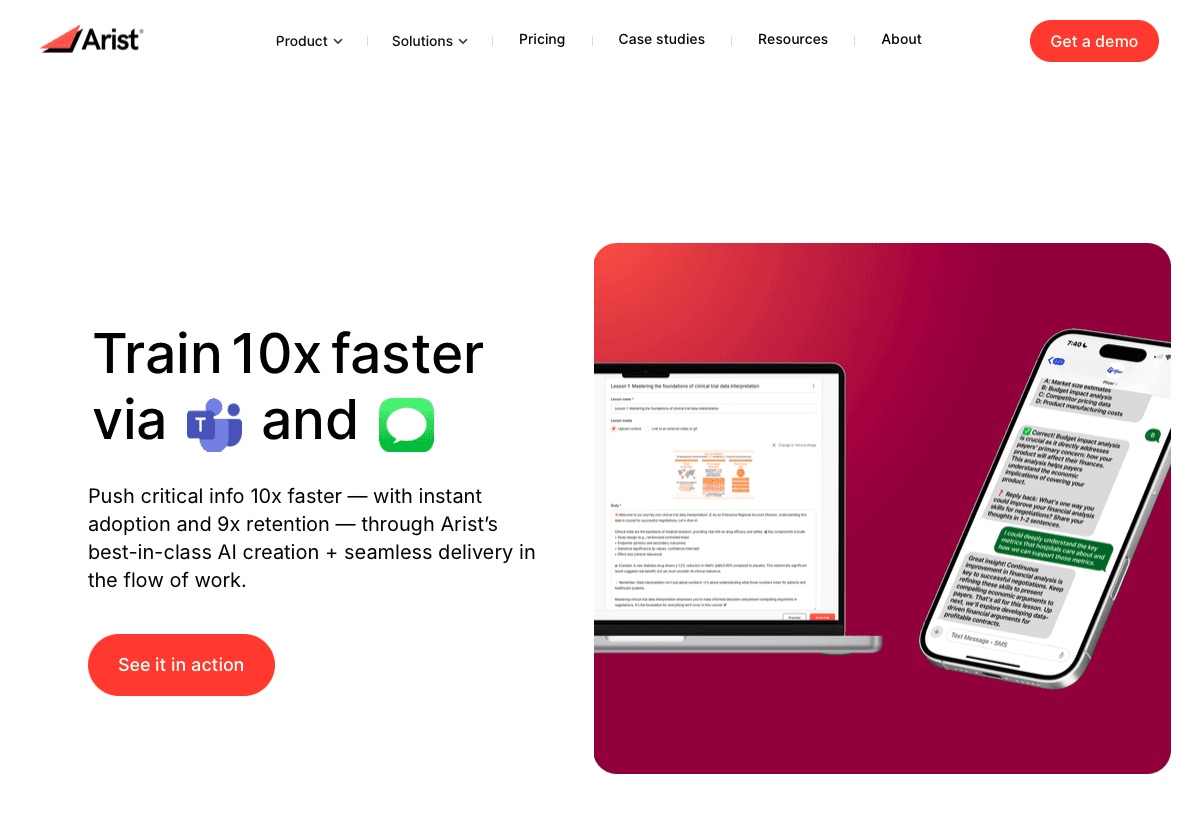
Even the best sales strategy breaks down if reps can’t apply it consistently in their daily work. Arist helps sales teams turn strategy into action by delivering enablement, training, and reinforcement through chat-based microlearning inside tools reps already use, including Teams, Slack, and SMS. Instead of relying on slide decks, portals, or one-time kickoff sessions, teams use Arist to push short lessons, deal guidance, objection-handling prompts, and competitive updates directly into the flow of work.
Sales leaders use Arist to onboard reps faster, reinforce messaging by role and segment, and keep strategy aligned as priorities shift throughout the quarter. AI-driven workflows convert playbooks, battlecards, and call frameworks into ongoing learning sequences that adapt based on performance and activity. With real-time visibility into engagement and behavior change, teams can see which strategies are actually influencing discovery quality, pipeline movement, and win rates, without adding more tools or manual overhead.
FAQs
What's the difference between inbound and outbound sales strategies?
Inbound attracts buyers who are already researching solutions through content and SEO, while outbound involves proactive prospecting through cold calls and emails to reach buyers before they start searching.
What pipeline coverage ratio should I target for consistent quota attainment?
Most sales teams need 3-4x pipeline coverage to hit quota consistently, but calculate your specific ratio by dividing your total pipeline value by your revenue target and adjusting based on your historical win rate.
When should I switch from single-channel to multi-channel lead generation?
Switch immediately if you're seeing declining response rates or stagnant lead volume. Email-only campaigns generate 30% fewer leads year-over-year, and coordinating across LinkedIn, email, and phone builds recognition faster than any single channel alone.
Final thoughts on sales strategy planning
The most effective sales strategies combine clear goals, deep buyer knowledge, and continuous improvement. You don't need to overhaul everything at once. Focus on strengthening one area, whether it's your training program or your multi-channel outreach, and measure the impact. Your sales strategy should grow with your team and adapt to what your customers actually need.
Jasper Ng
Bring
real impact
to your people
We care about solving meaningful problems and being thought partners first and foremost. Arist is used and loved by the Fortune 500 — and we'd love to support your goals.
Curious to get a demo or free trial? We'd love to chat: