Customer Service Training: The Complete Guide (December 2025)
Bad customer service quietly erodes revenue, trust, and retention, while strong service turns everyday interactions into repeat business. The gap between the two is rarely motivation or hiring; it’s training that actually sticks. Too many customer service programs rely on long manuals and one-off workshops that overload employees and fade from memory weeks later. Modern teams need customer service training that shows up inside the workday, reinforces skills in short bursts, and supports employees at the moment of need. This guide explains how high-performing organizations build customer service training that works in practice, including how some teams use a mobile-first learning approach to deliver coaching directly through tools employees already use.
TLDR:
Customer service training delivers 96% ROI and reduces turnover costs exceeding 150% of salary.
Programs need hard skills (product knowledge, CRM systems) and soft skills (empathy, listening).
Chat-based microlearning via SMS or Teams achieves 95% completion vs. 30% for traditional LMS.
AI can accelerate the conversion of existing materials into structured courses and personalize learning paths by role.
Some modern solutions automate training delivery through SMS, Teams, and Slack with AI-driven microlearning.
What Is Customer Service Training?
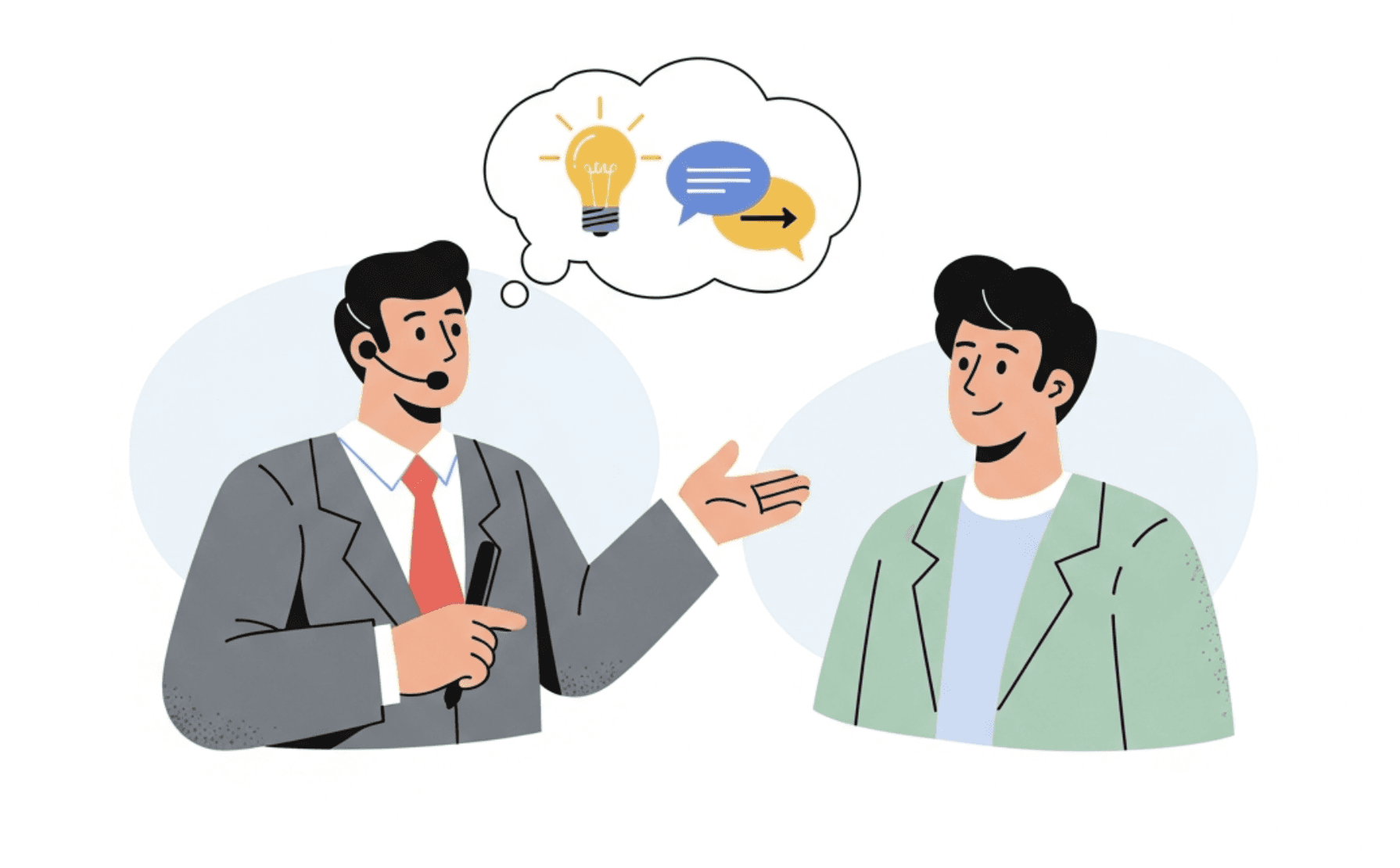
Customer service training teaches employees how to interact with customers effectively. It covers practical problem-solving skills and interpersonal techniques that create positive experiences.
This training prepares teams to handle inquiries, resolve issues, and build customer relationships using effective employee training techniques. Topics range from product knowledge and communication to empathy, active listening, and conflict resolution. The goal is to turn customer interactions into opportunities that strengthen loyalty and drive business results.
Why Customer Service Training Matters
96% of companies recoup their investment in customer training, making it one of the most reliable areas for L&D budgets.
The performance gap is clear. 88% of top service decision-makers invest considerably in agent training, compared to only 57% of underperformers. This difference appears in retention rates, resolution times, and customer lifetime value.
Trained employees resolve issues faster with fewer escalations, and improving employee training can amplify these results. They also stay longer, reducing turnover costs. Better service drives repeat purchases, referrals, and higher average order values as employees grow more confident and customers more loyal.
Types of Customer Service Training Programs
Organizations choose from several training formats, each with distinct advantages for different workforce needs.
Instructor-Led and In-Person Training
Classroom sessions, consultant-led workshops, and onsite seminars provide real-time interaction and hands-on practice through role-playing scenarios. The tradeoff: scheduling coordination, travel expenses, and time away from work.
Digital and Self-Paced Learning
Online courses, webinars, video libraries, and SMS-based microlearning are modern training methods that let employees train on their own schedule. These formats scale quickly and reduce costs per learner, though they require self-discipline and offer less immediate feedback.
Necessary Skills to Include in Training
Customer service training covers two skill types.
Hard skills include product knowledge, CRM systems, ticketing tools, and troubleshooting steps. These give employees the technical ability to resolve issues correctly.
Soft skills cover communication, active listening, empathy, and problem-solving. They determine how employees deliver solutions and handle difficult situations. Training both areas creates service teams that are technically capable and easy to work with.
Building an Effective Training Program
Start with a needs assessment. Review customer feedback, support tickets, and employee interviews to identify performance gaps. This shows where training will have the biggest impact.
Set measurable goals tied to business outcomes. Target specific metrics like first-contact resolution rates, average handle time, or customer satisfaction scores instead of general improvement goals.
Build your curriculum around real scenarios. Use actual customer transcripts, common complaints, and escalation cases as training material so employees can apply what they learn immediately.
Structure content in progressive modules. Start with foundational skills, then add advanced techniques like de-escalation or complex problem-solving. Test comprehension between modules before advancing.
Onboarding and New Hire Training
New hire training determines how quickly employees become productive and how long they stay. The first 90 days shape confidence, competence, and cultural fit.
Onboarding splits into four phases. Week one covers company culture, policies, systems access, and team introductions. Week two focuses on product knowledge and service standards. Weeks three and four add supervised customer interactions with real-time coaching.
Shadowing experienced agents shows new hires how skills apply in actual conversations. Reverse shadowing lets veterans monitor as trainees handle live interactions with backup support available.
AI-powered microlearning delivers one concept at a time through SMS or Teams, reinforcing knowledge between shifts. This cuts training time while improving retention compared to dense onboarding manuals, as microlearning research confirms.
Ongoing Training and Continuous Development
Skills and knowledge from training can decay within weeks without reinforcement, especially when employees don’t apply what they learned immediately.
Run quarterly refreshers on core skills like de-escalation and policy changes, and learn how to deliver a good training session without disrupting workflows. Short, focused sessions keep teams current without pulling them away from customer interactions for extended periods.
Launch just-in-time training when rolling out new products or updating procedures. Delivering information exactly when teams need it increases retention and immediate application.
Tackle individual performance gaps through coaching based on call reviews and quality scores. Personalized feedback targets specific weaknesses that group sessions miss.
Delivery Methods for Customer Service Training
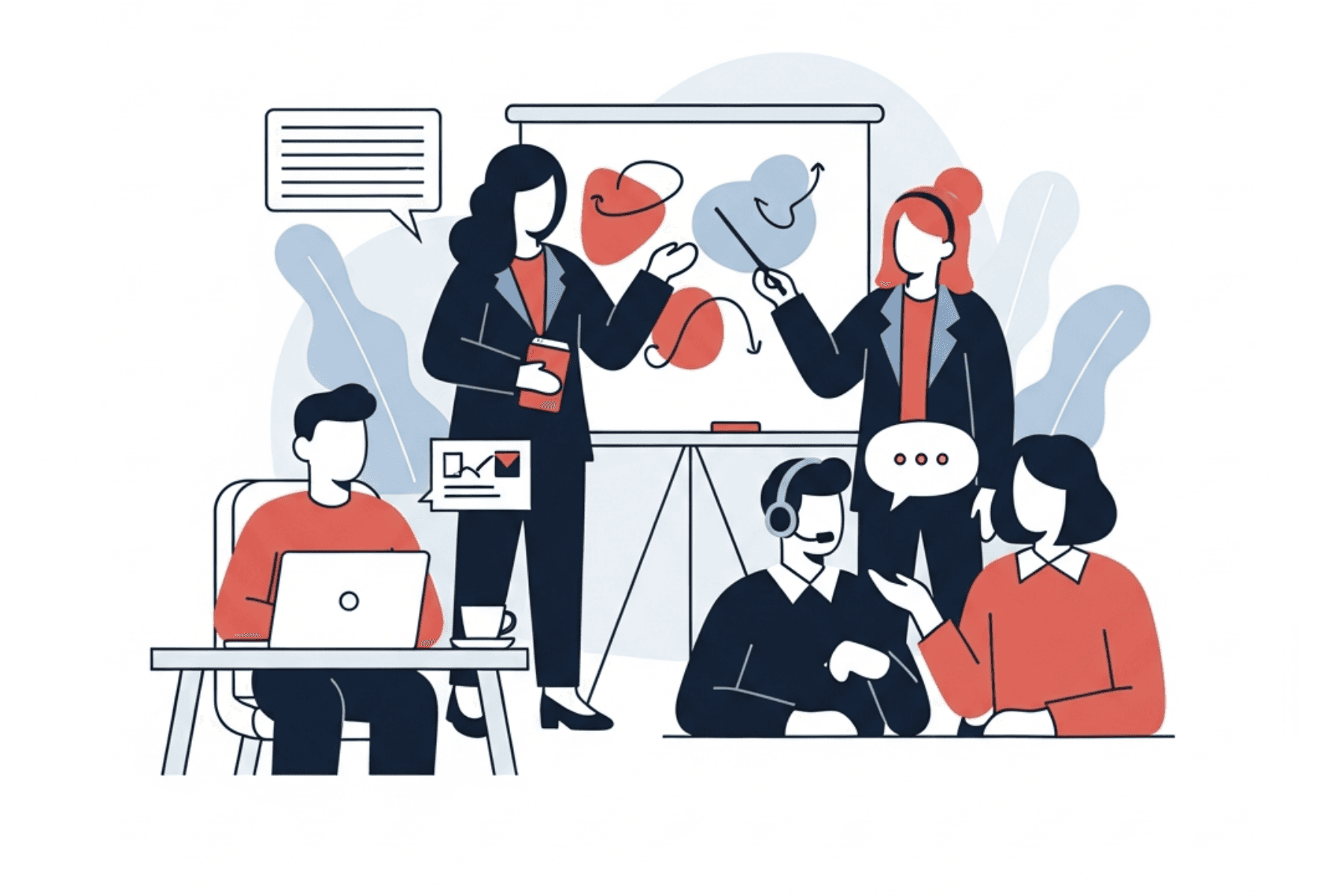
The delivery method determines reach, engagement, and completion rates across your workforce.
In-person workshops excel for complex scenarios requiring group practice and immediate feedback. They work well for leadership training and sensitive topics like de-escalation, but limit scalability and require scheduling coordination.
E-learning modules and LMS courses offer self-paced flexibility. Employees access content when convenient, though completion rates typically hover around 30% without push notifications or accountability mechanisms.
Chat-based microlearning through SMS, Teams, or Slack removes login friction. Training arrives directly in tools employees already use daily. Completion rates can exceed 95% when learning happens inside workflow channels instead of requiring separate apps. This approach works well for frontline workers on mobile devices and distributed teams across time zones.
Measuring Training ROI and Effectiveness
Track metrics before and after training to measure impact. Customer satisfaction scores (CSAT or NPS) show whether service quality improved. First contact resolution rates reveal if employees solve problems without escalations.
Monitor employee retention rates. Higher retention after training indicates improved job readiness and confidence. Calculate turnover costs saved by multiplying retained employees by replacement expenses.
Measure support cost per ticket. Faster resolution times and fewer escalations reduce functional expenses. Compare average handle time and ticket volume trends quarter over quarter.
Calculate customer lifetime value changes when measuring the ROI of learning and development programs. Trained teams create better experiences that increase repeat purchases and reduce churn. Track retention rates and purchase frequency among customers served by trained versus untrained agents.
Overcoming Common Training Challenges
Training programs fail when they ignore practical obstacles.
Low engagement stems from lengthy sessions that pull employees off the floor. Break content into 5-minute bursts delivered through SMS or Teams during natural breaks so training arrives when employees can focus.
Varying skill levels require personalized paths. Use pre-assessments to route experienced agents past basics while giving newer hires foundational content, then adjust difficulty based on quiz performance.
High turnover demands faster onboarding. Space lessons across shifts instead of blocking full days so employees start contributing revenue sooner while learning continues.
Measuring behavior change requires tracking actions beyond completion rates. Monitor how trained employees handle escalations, apply de-escalation techniques, and improve resolution speed in actual customer interactions.
How AI Is Changing Customer Service Training
AI removes manual work that slows training delivery. Content that once required weeks now takes hours. Systems convert existing materials into structured courses, generate role-specific scenarios, and create assessments without instructional designers rebuilding everything from scratch.
Adaptive learning adjusts content based on employee performance. Systems route learners through different modules depending on quiz results, role requirements, and skill gaps from actual customer interactions. Experienced agents skip basic material while new hires receive foundational instruction.
Automated reinforcement sends knowledge checks and skill refreshers through SMS or Teams at optimal intervals. Spaced repetition prevents knowledge decay between formal sessions and maintains competency without removing employees from active duty.
Most CX leaders report positive ROI from AI tools supporting their service agents. Analytics reveal which skills improve, where employees struggle, and how training impacts resolution time and satisfaction scores.
The best corporate training software with AI scales personalized training across thousands of employees while maintaining consistency. Every learner receives content aligned to their needs, delivered when they can act on it, without proportional increases in training staff.
How Arist Supports Modern Customer Service Training
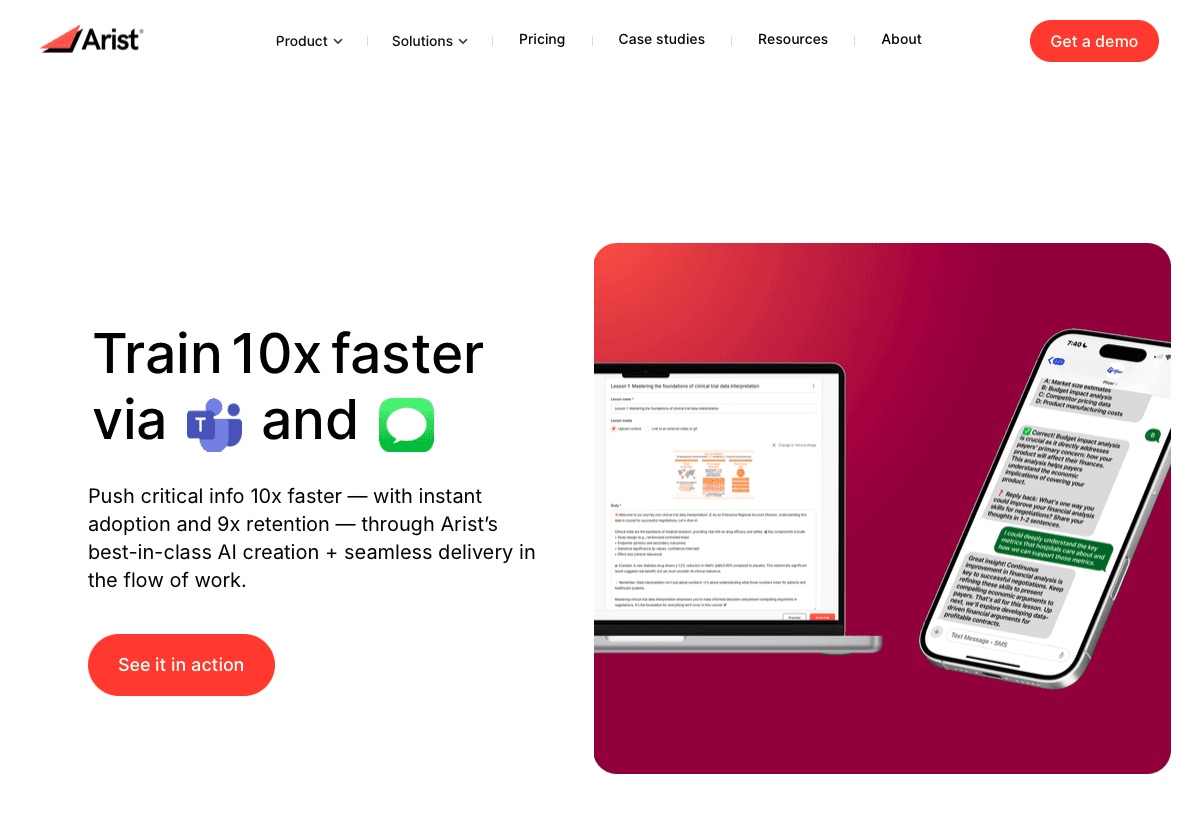
Building customer service skills at scale is difficult when training lives outside the tools employees use every day. Arist solves this by delivering customer service training through chat-based microlearning inside SMS, WhatsApp, Teams, and Slack, so learning happens during real work moments instead of separate logins or long sessions. Teams can convert existing manuals, SOPs, and slide decks into short, role-specific lessons in hours, then automatically deliver reinforcement, quizzes, and reminders over time to prevent knowledge loss.
Arist’s AI agents handle the training cycle, from identifying skill gaps to creating content, routing lessons by role, and linking learning activity to customer and business metrics. This approach works especially well for frontline and distributed service teams, regulated environments, and organizations that need high completion without pulling employees off the floor. Companies use customer service training software from Arist to onboard faster, reinforce soft skills like empathy and communication, and keep service standards consistent across locations while maintaining visibility into performance and retention outcomes.
FAQs
When should we refresh customer service training for existing employees?
Run quarterly refreshers on core skills and launch just-in-time training when introducing new products or policy changes to prevent knowledge decay and maintain performance.
Can microlearning really improve completion rates compared to traditional training?
Yes, chat-based microlearning delivered through SMS, Teams, or Slack can achieve completion rates above 95%, compared to typical LMS completion rates around 30%.
What metrics should we track to measure customer service training ROI?
Monitor customer satisfaction scores, first contact resolution rates, average handle time, employee retention rates, and support cost per ticket before and after training to quantify impact.
Final thoughts on developing customer service skills
Strong customer service is built through preparation that matches the reality of daily customer interactions. The most effective customer service training is practical, ongoing, and delivered in ways employees can actually use between conversations, tickets, and shifts. Teams that focus on closing real skill gaps, reinforcing knowledge in short intervals, and tying learning back to customer and business results see better performance and lower turnover over time. Tools like Arist support this approach by delivering training inside existing workflows, helping service teams build confidence, consistency, and better experiences for every customer interaction.
Jasper Ng
Bring
real impact
to your people
We care about solving meaningful problems and being thought partners first and foremost. Arist is used and loved by the Fortune 500 — and we'd love to support your goals.
Curious to get a demo or free trial? We'd love to chat: