Best Multi-Channel Learning Delivery Platforms (December 2025 Update)
Your employees spend their day inside Teams and Slack, so sending them to a separate portal for training only adds friction and lowers completion rates. True multi-channel learning should meet people where they already work, but many “integrated” solutions still rely on app installs, clunky redirects, or external logins. After assessing the leading platforms, including a top SMS- and chat-based training provider, we uncovered which tools genuinely deliver smooth training inside your existing workflows.
TLDR:
Multi-channel learning delivers training through Teams, Slack, and SMS without app downloads
Modern chat- and SMS-based platforms achieve 84% completion rates by meeting learners in tools they already use daily
AI converts 5,000+ pages into courses 10x faster than manual builds
Moment-of-need triggers launch training when performance data reveals skill gaps
Secure delivery to personal devices allows frontline teams to learn even without corporate email access
What Is Multi-Channel Learning Delivery?
Multi-channel learning delivery sends training through communication tools employees already use. Content arrives via MS Teams, Slack, or SMS instead of requiring learners to log into a separate LMS or download another app.
This approach removes access friction. When employees must go to a dedicated learning system, completion rates drop. Multi-channel delivery meets learners where they already spend their time.
The shift reflects how distributed teams communicate. A sales rep receives product updates via Teams between calls. A frontline worker gets safety reminders through SMS during their shift.
No additional logins. No app fatigue. Learning fits into the flow of work.
How We Ranked Multi-Channel Learning Delivery Solutions
We assessed each solution against six criteria that matter when scaling training across distributed teams.
First, delivery channel flexibility. Does the solution support SMS, Slack, and MS Teams without requiring app downloads? Second, content creation speed. How quickly can you build and deploy courses? Third, integration depth. Does it connect with your existing HRIS and LMS systems?
Fourth, analytics capabilities. Can you identify knowledge gaps at the individual learner level in real time? Fifth, deployment simplicity. How much IT support does rollout require? Sixth, compliance features. Does it handle secure learning on personal devices for frontline workers?
The global multi-channel network market continues expanding as organizations recognize the need to reach employees across multiple touchpoints.
These criteria reflect what L&D teams need: less friction, faster deployment, and measurable impact without forcing employees into yet another system.
Arist
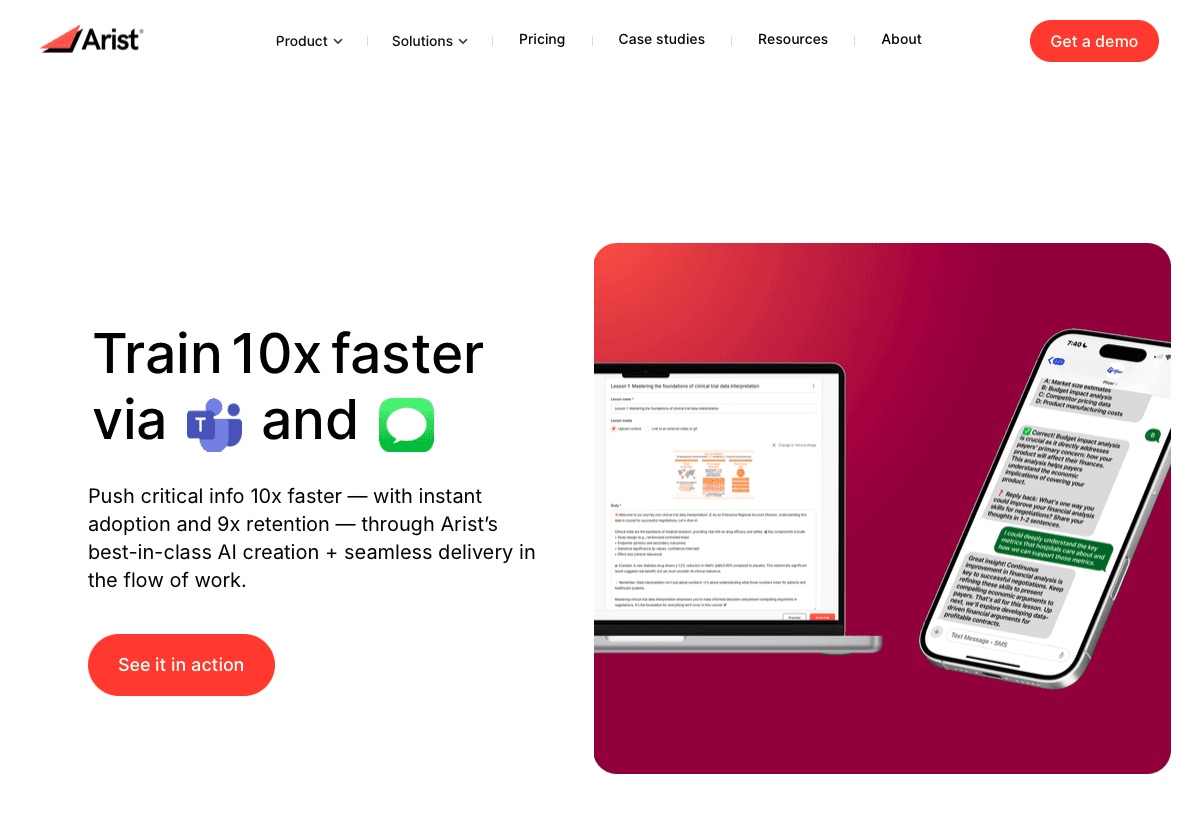
Arist delivers training through Microsoft Teams, Slack, SMS, and WhatsApp without requiring downloads. Learners receive bite-sized lessons directly in the tools they use during their workday.
The Creator Agent converts up to 5,000 pages of source documents into complete courses with one click. This AI-powered conversion happens 10x faster than manual course building. The system includes a hallucination-proof engine that verifies accuracy against uploaded materials.
Each lesson arrives as a 2–5 minute message-based session. Employees answer questions and complete interactions without leaving their chat interface. Approximately 84% completion rates across 170,000+ enrollments result from eliminating navigation friction.
Arist connects with over 100 systems including Salesforce and Gong for moment-of-need triggers. When a sales call shows positioning gaps, a targeted reinforcement course launches automatically. When someone joins a new team, onboarding starts based on HRIS data.
Axonify
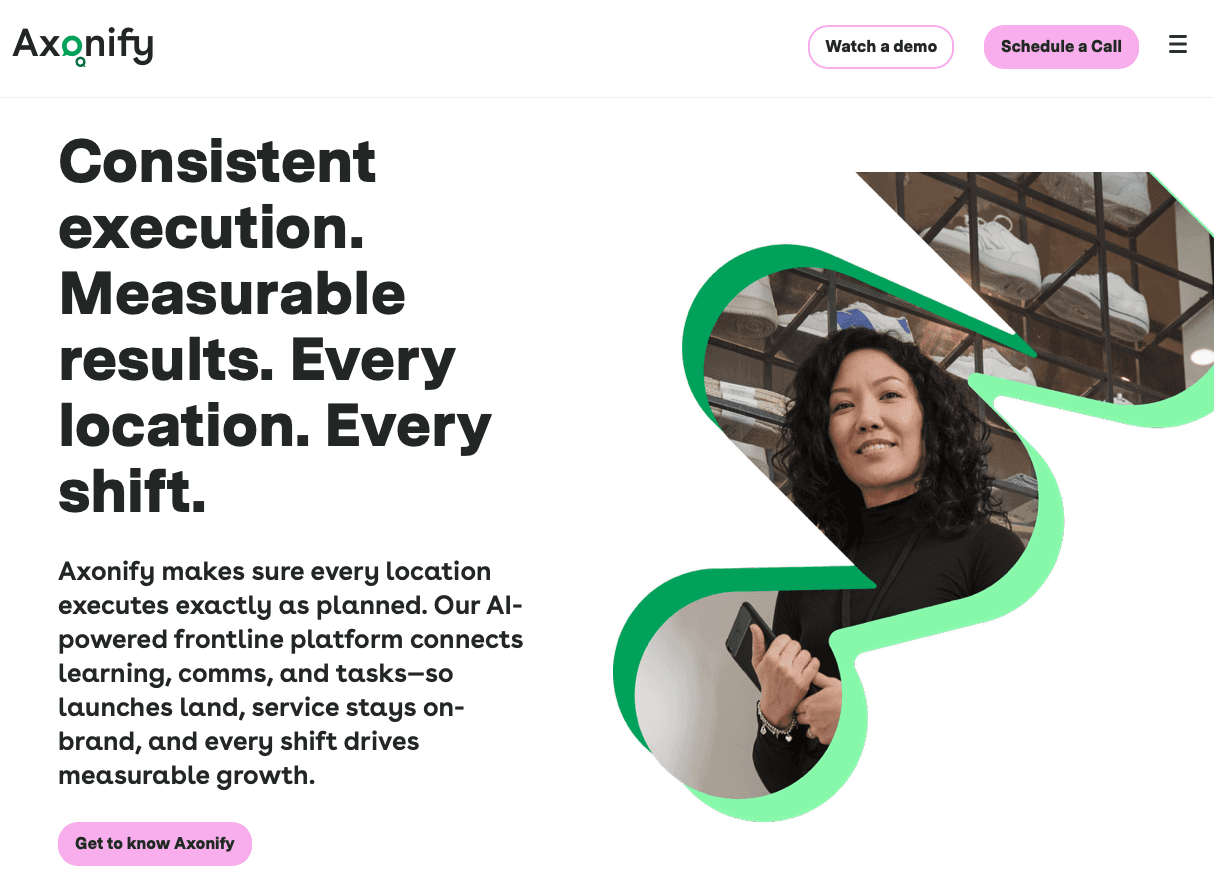
Axonify delivers microlearning through mobile apps with AI-driven personalization and spaced repetition algorithms for frontline workforce training. Their approach focuses on daily training sessions designed to build knowledge retention over time.
What They Offer
Daily 3–5 minute training sessions with adaptive learning algorithms that adjust content difficulty based on individual performance
Gamification features including points and leaderboards to drive engagement
Performance analytics and reporting dashboards for tracking learner progress
Axonify works well for large retail and manufacturing organizations with consistent mobile device access seeking gamified training experiences with detailed performance tracking. The e-learning market's growth reflects increasing demand for these digital training solutions.
The key limitation: Axonify requires dedicated mobile app downloads, which creates barriers for organizations with BYOD compliance concerns or workers using personal devices. Unlike multi-channel solutions, Axonify is primarily mobile app-based instead of chat-native.
SC Training (EdApp)
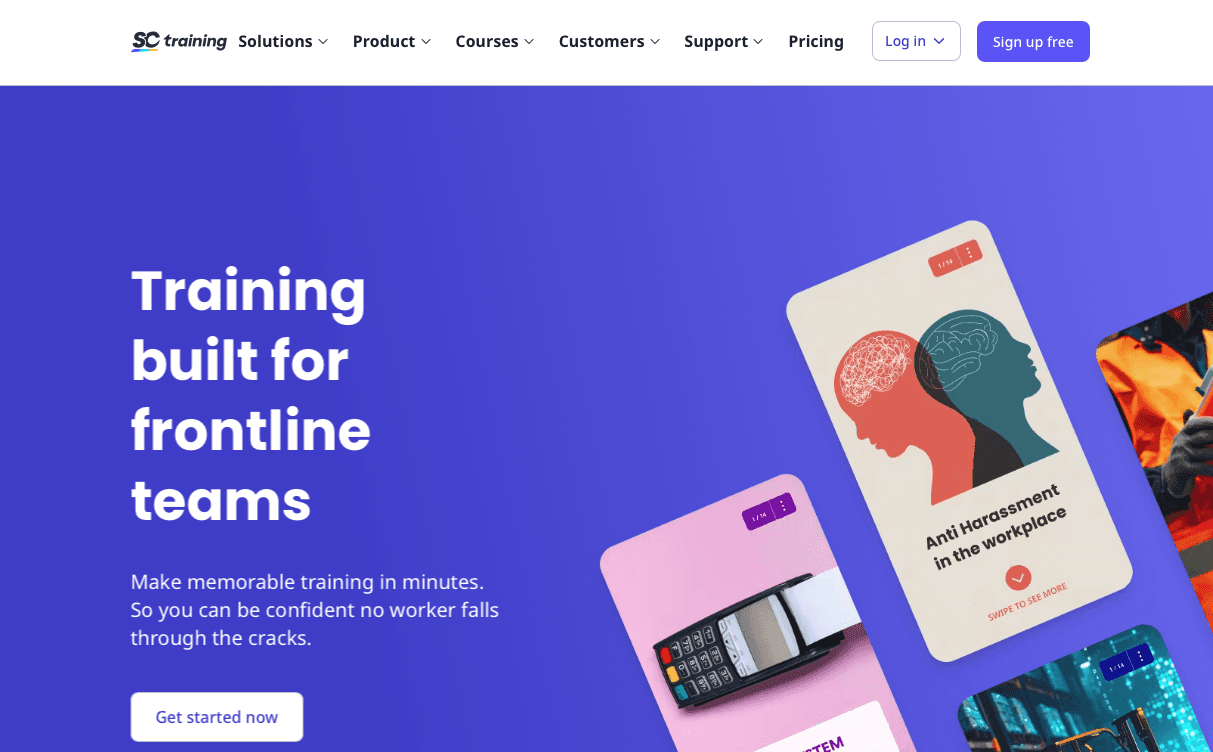
SC Training provides mobile-first microlearning with AI course creation tools and pre-built content libraries focused on safety and compliance training.
What They Offer
AI-powered course creation from prompts that generate training content quickly
Mobile-optimized content delivery designed for smartphone access
Pre-designed course templates for common training scenarios
Safety and compliance focus with ready-made content libraries
SC Training works well for organizations focusing on safety training with teams that have smartphone access and need quick deployment of compliance-focused content.
The key limitation: Content delivery requires learners to access a separate mobile app instead of integrating with existing workplace communication tools. This creates friction compared to solutions that work within Teams, Slack, or SMS channels workers already use throughout their workday.
Absorb LMS
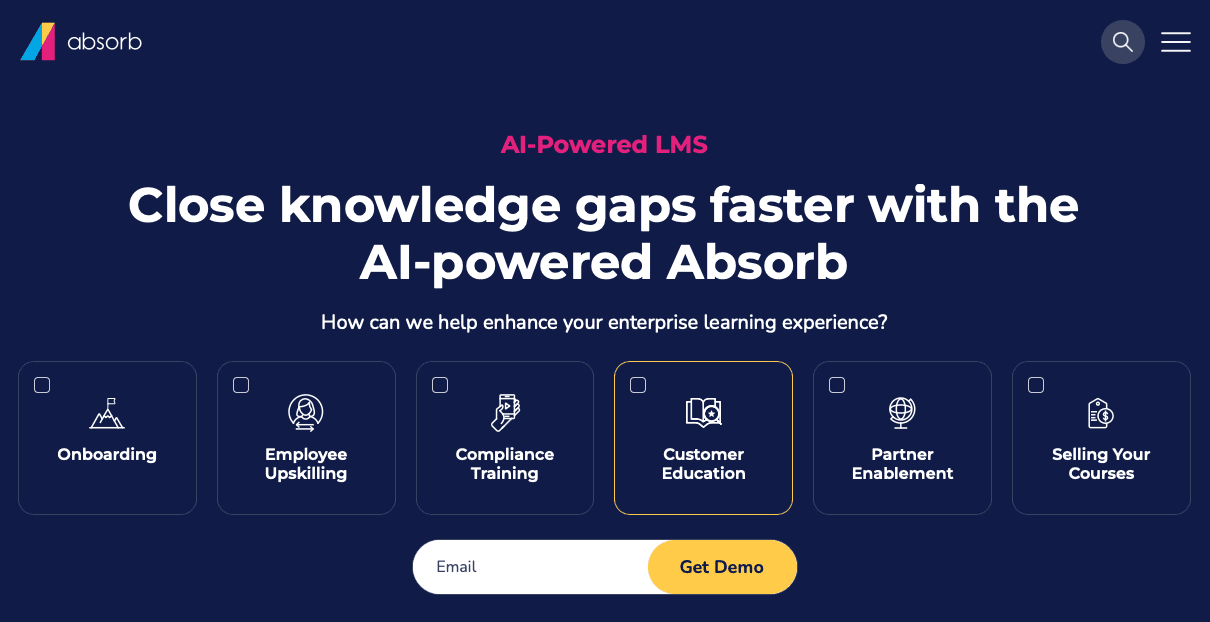
Absorb LMS delivers AI-based learning management with customizable dashboards and enterprise-level reporting for corporate training programs.
What They Offer
AI course authoring with Create AI tools that help build training content faster
Mobile app with offline capabilities so learners can access materials without connectivity
Enterprise integrations with HRIS and CRM systems to sync employee data and track training across tools
Advanced analytics and compliance reporting to meet regulatory requirements and measure program effectiveness
Absorb LMS works well for mid to large enterprises requiring detailed reporting and integration capabilities for structured training programs.
The key limitation: Absorb operates primarily as a traditional LMS, with most learning still happening in its own portal, even though it offers integrations (for example, a Microsoft Teams app and virtual meeting connectors) instead of chat-first, message-based delivery in channels like SMS or Slack.
TalentLMS
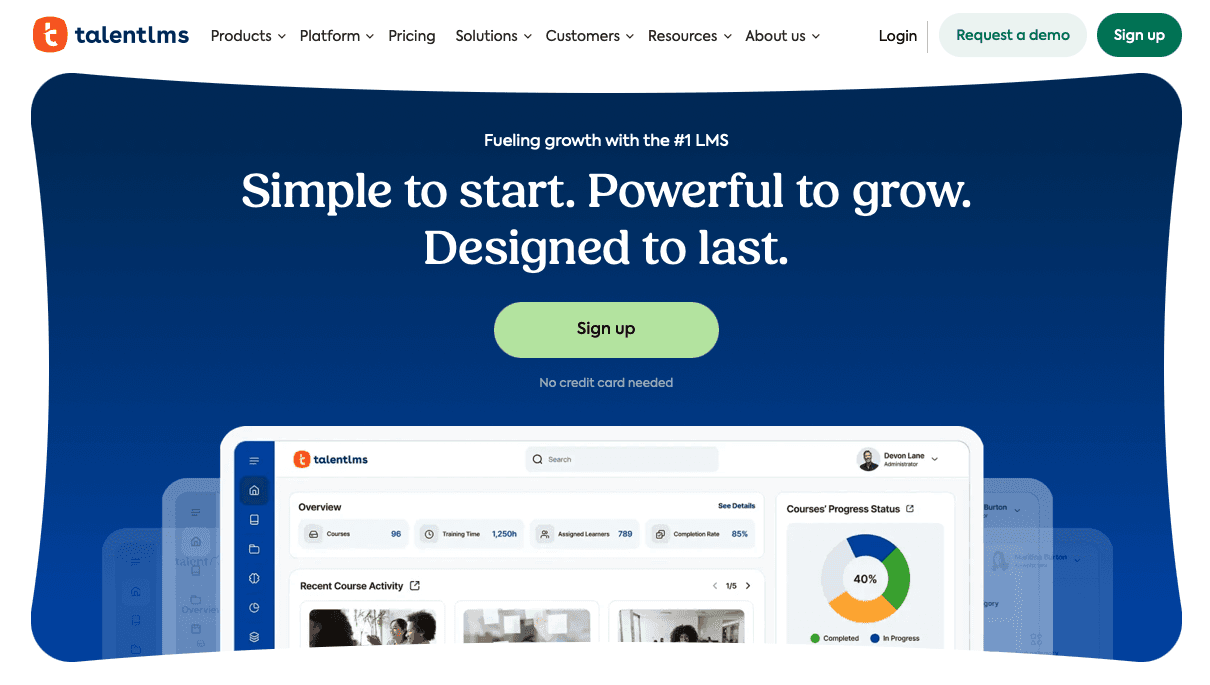
TalentLMS provides cloud-based learning management with course creation tools and gamification features for businesses of all sizes.
What They Offer
Built-in course authoring tools with drag-and-drop functionality for creating training content
Gamification with badges and points to encourage learner engagement
Mobile app with offline access for learning without internet connectivity
Third-party integrations including Zoom and Salesforce for connecting with existing business tools
TalentLMS works well for small to medium businesses seeking straightforward LMS functionality with basic mobile access for structured training programs.
The key limitation: TalentLMS operates as a standalone LMS requiring separate login credentials and navigation away from daily workflow tools. It doesn’t natively deliver full courses as chat-based lessons inside tools like Slack or Teams. Instead, it relies on its LMS portal, with integrations mainly used for video sessions (e.g., MS Teams for ILT) or notifications and automations in tools like Slack.
Highspot
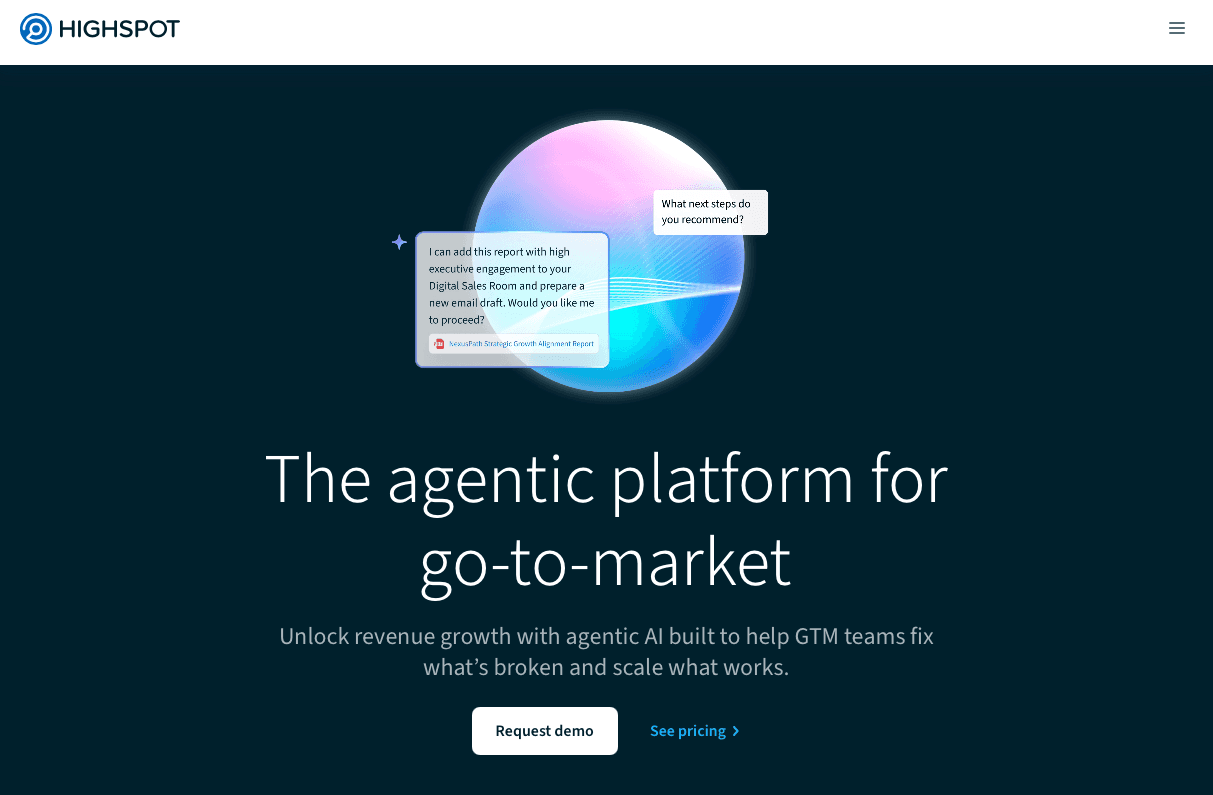
Highspot delivers sales enablement through content management and training modules for customer-facing teams. Their approach helps sales and marketing organizations manage buyer engagement.
What They Offer
Sales content management and organization tools
Training and coaching modules for sales teams
Buyer engagement tracking and analytics
Sales performance reporting dashboards
Highspot works well for sales organizations needing content management integrated with training for customer-facing workflows. The learning management system market's expansion shows growing demand across all training categories.
The key limitation: Highspot focuses exclusively on sales enablement instead of organization-wide learning needs. Content delivery requires accessing the Highspot system, limiting application beyond sales teams.
Why Arist Is the Best Multi-Channel Learning Solution
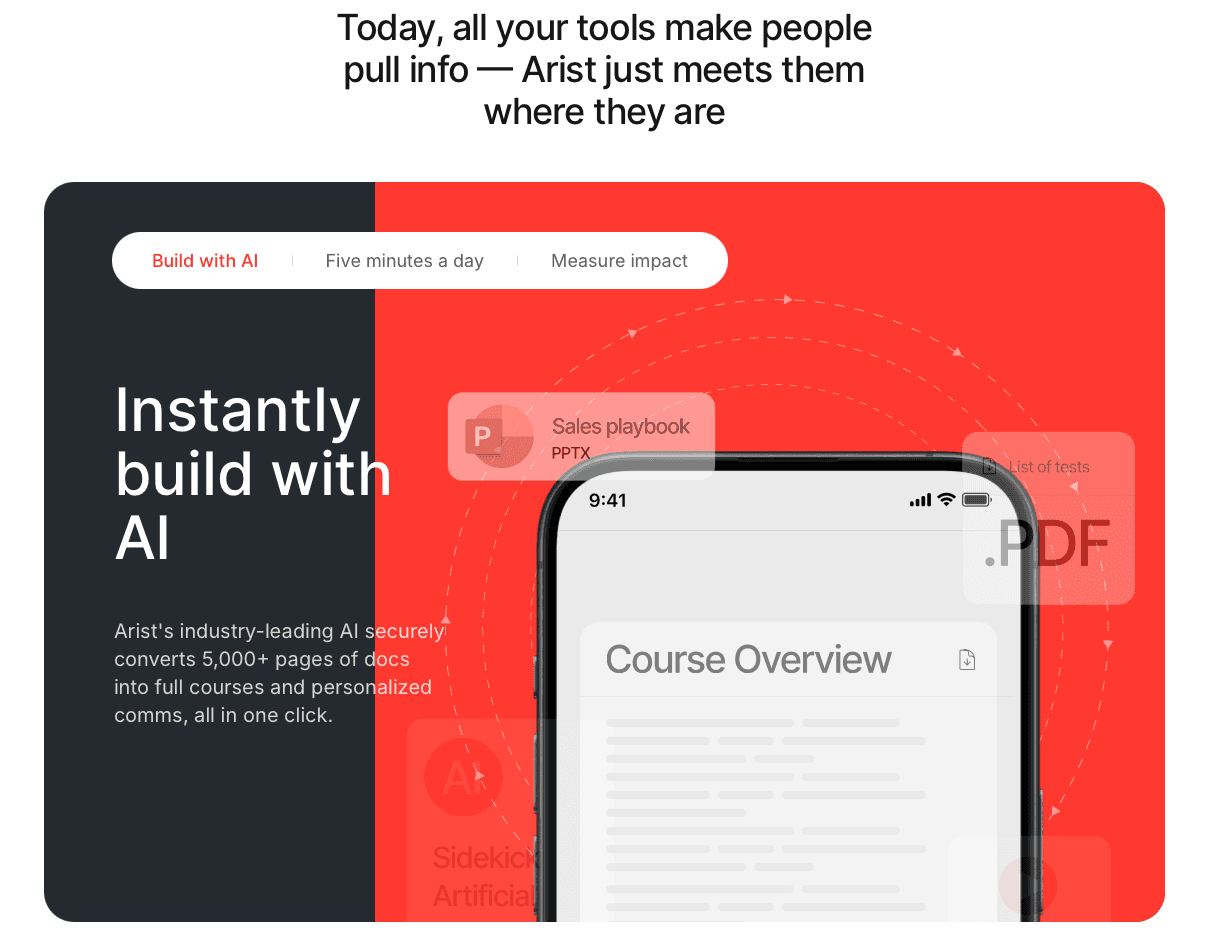
Training arrives in the tools teams already use every day. No app downloads, no separate logins, no new systems to learn. Courses run directly inside Teams, Slack, SMS, and other channels where employees already spend their time.
AI converts existing materials into courses 10x faster than manual builds. This speed matters when responding to rapid changes or scaling training across thousands of employees. The 84% completion rate reflects what happens when learning meets people where they work instead of asking them to go elsewhere.
For frontline teams without corporate devices or email, SMS-based training delivers secure courses to personal phones. No device provisioning costs, no compliance headaches.
Integrations with over 100 systems trigger learning at critical moments. When performance data reveals a gap, relevant training launches automatically. Learning becomes continuous enablement tied to real workflow needs, not scheduled events disconnected from daily work.
FAQs
What is multi-channel learning delivery?
Multi-channel learning delivery sends training through communication tools employees already use (like MS Teams, Slack, or SMS) instead of requiring them to log into a separate system or download an app.
How do I choose between a traditional LMS and multi-channel delivery?
If your teams work across distributed locations, use personal devices, or struggle with low completion rates, multi-channel delivery removes access barriers by meeting learners in their existing workflow tools.
What completion rates should I expect from multi-channel learning?
Multi-channel solutions that deliver training directly through existing communication tools achieve considerably higher completion rates, Arist reports 84% completion across 170,000+ enrollments by eliminating navigation friction.
How quickly can I deploy training with AI-powered multi-channel platforms?
AI-powered platforms can convert up to 5,000 pages of source documents into complete courses in one click, creating training content 10x faster than manual course building methods.
Final thoughts on delivering training through existing channels
Training that fits naturally into your team’s daily workflow actually gets completed, which is why delivering learning through Slack, Teams, and SMS removes the login barriers that historically tank engagement. When training arrives inside the tools people already use, results improve without adding complexity or disruption. Modern multi-channel learning delivery tools like Arist make it possible to reach employees instantly, trigger learning at the moment of need, and support frontline teams without corporate email. By meeting people where they work, organizations can deliver faster learning, higher retention, and a dramatically smoother experience for both learners and L&D teams.
Jasper Ng
Bring
real impact
to your people
We care about solving meaningful problems and being thought partners first and foremost. Arist is used and loved by the Fortune 500 — and we'd love to support your goals.
Curious to get a demo or free trial? We'd love to chat: