Best AI Training Courses and Certificates (December 2025)
AI training is no longer limited to engineers and data scientists. Sales teams, HR managers, and frontline workers now need practical AI literacy to stay effective at work. The real problem is not access to courses; it’s finishing them. Learners quit traditional online programs before completion because they demand long, uninterrupted time blocks that don’t fit real jobs. The courses people actually complete deliver short lessons inside tools they already check every day, paired with recognized certificates from companies like Google, IBM, or Microsoft. That’s why many teams now rely on AI training courses that fits into the workday, because a finished credential from a credible source has more career value than an abandoned course with a big name.
TLDR:
Free AI courses from Google, IBM, and Microsoft offer certificates in under 5 hours.
Traditional online courses see 12.6% completion rates vs. 95% for SMS-based training.
Prompt engineering skills transfer across modern AI tools and improve output quality.
Some modern tools deliver AI training through SMS, Teams, and Slack with 95%+ completion rates.
AI training that fits into daily workflows leads to higher retention and real on-the-job application.
Why AI Training Matters in 2025
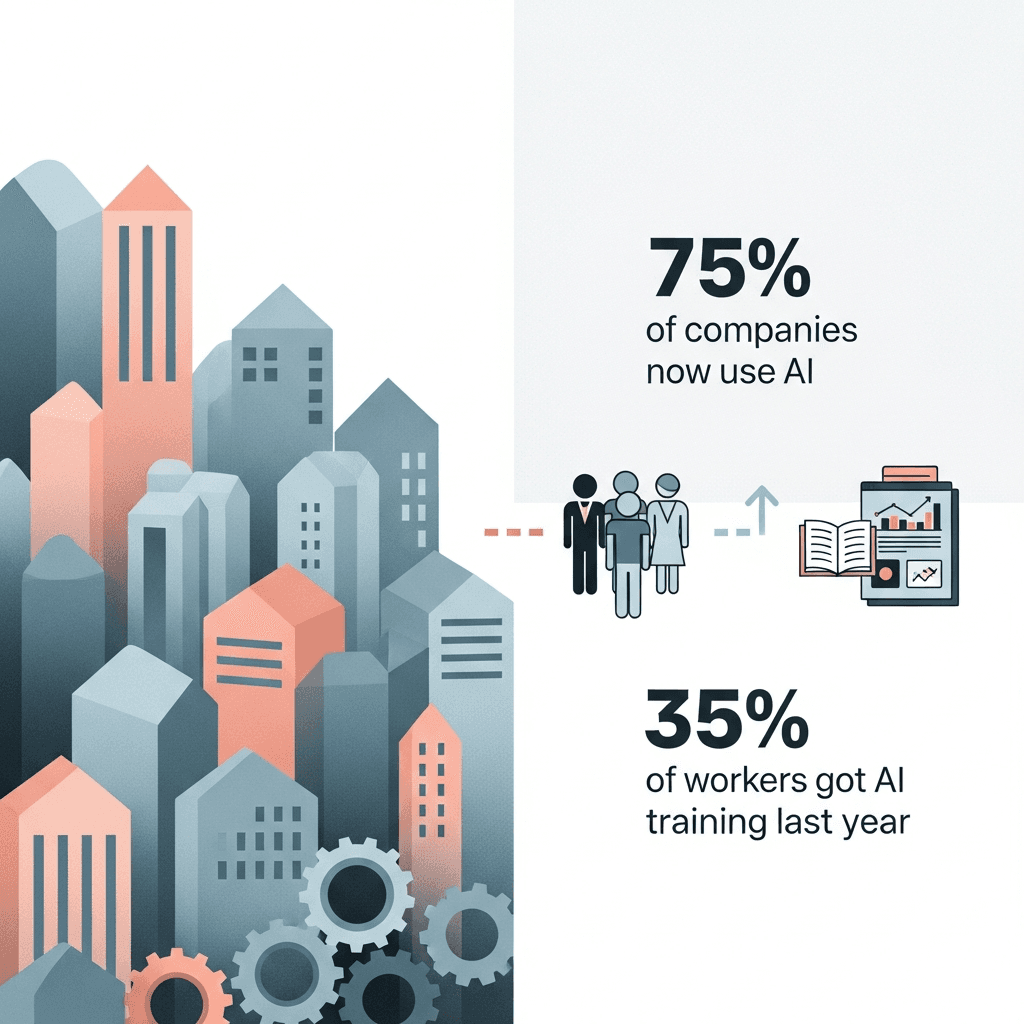
AI adoption is moving fast. 75% of companies now use AI, but only 35% of workers got AI training last year. This gap matters for staying competitive.
Skills requirements in AI-related roles are changing 66% faster than other jobs. Workers who don't upskill risk getting left behind as tasks automate and AI-assisted roles grow.
For individuals, this creates opportunity. AI skills are increasingly associated with higher pay and stronger career outcomes across many roles, especially where AI tools are part of day-to-day work. Understanding how to work with AI tools directly affects your career growth and income.
Google AI Essentials
Google AI Essentials is a self-paced certificate program for beginners. You can complete it in under 5 hours with no prior experience.
The course covers AI fundamentals, productivity applications, prompt engineering, and responsible AI practices. Google offers it through Coursera, and the certificate comes from one of the leading AI developers in the industry.
Free AI Training Courses with Certificates
Several providers offer free AI courses with verifiable certificates from organizations building AI systems.
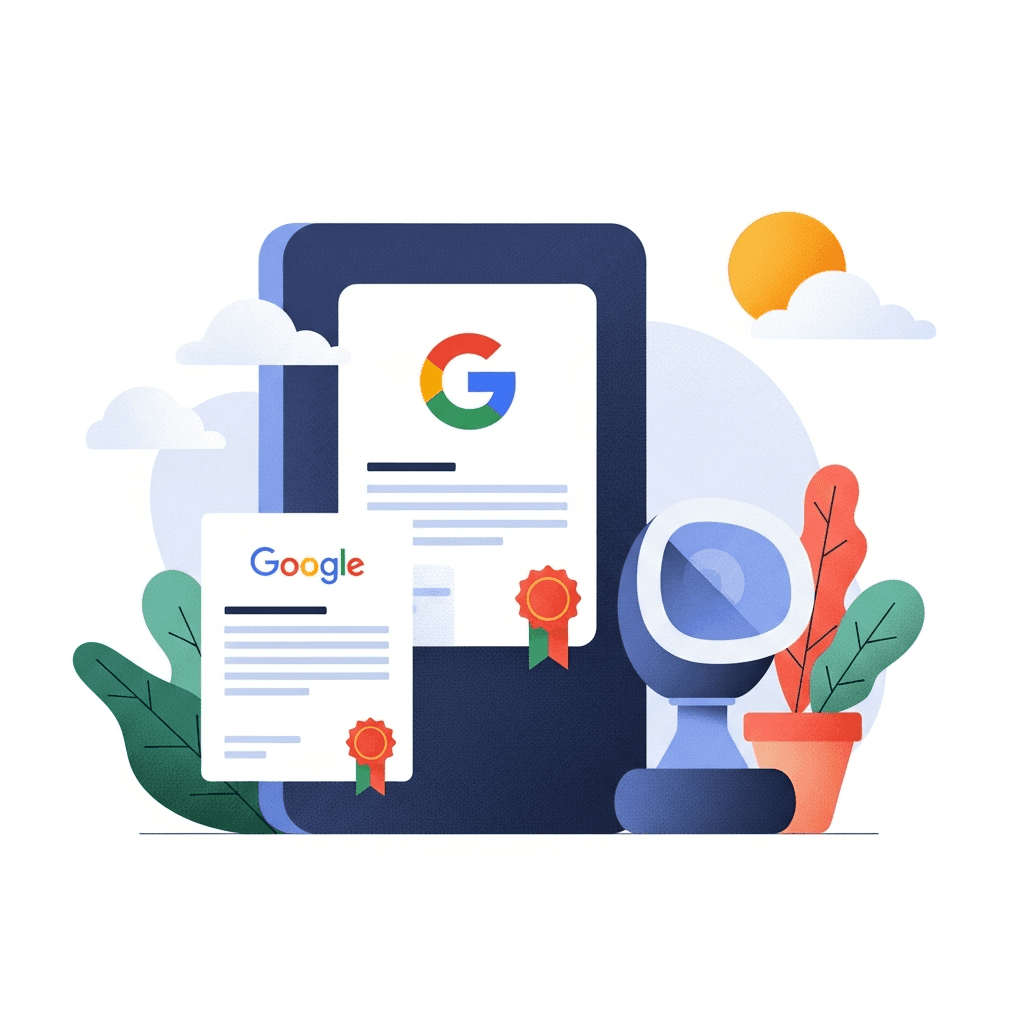
Google launched over 3,000 free AI courses through Google Skills, accessible with 35 free credits monthly via their Innovators program. IBM offers AI Fundamentals through Coursera with a shareable certificate. Microsoft provides Azure AI Fundamentals (AI-900) training materials free, though the exam costs separately.
DeepLearning.AI partnerships with Coursera include beginner courses on generative AI and prompt engineering. LinkedIn Learning offers free trials with certificates for courses on AI productivity and ChatGPT basics.
Understanding Course Completion Rates and Engagement
The average online course completion rate is 12.6%. Incomplete courses deliver no certificate and limited skill development, since the most valuable concepts and practical applications appear in final modules.
Delivery method affects completion rates. Self-paced video courses see the lowest rates. Live cohorts with deadlines perform better.
Course length matters. Shorter formats with clear milestones maintain momentum. Courses delivered in tools like Teams or Slack remove friction compared to separate learning portals. Regular check-ins, progress tracking, and spaced repetition increase completion and retention of AI concepts.
AI Training for Business Teams
Enterprise AI training needs to work across different locations, roles, and skill levels while tracking both completion and competency.
Consider delivery method based on your workforce. Desk workers can use LMS-based video courses. Frontline staff in manufacturing, retail, or field sales need training through SMS, WhatsApp, or Teams where they already communicate. Look for programs that connect with your HRIS and collaboration tools.
Deployment speed matters when AI capabilities change quickly. Courses requiring weeks of customization slow adoption. Look for role-based personalization, automated reinforcement, and analytics tied to business outcomes beyond completion rates.
Training that only reaches corporate employees creates skill gaps and limits AI tool adoption across your organization. Choose delivery formats that work for all employee segments without requiring app downloads or separate logins.
Beginner AI Courses
Beginner AI courses require no programming experience or technical background. You can start learning immediately, regardless of your role or education.
These courses focus on AI literacy instead of technical development. You'll learn how AI systems make decisions, where they work well, and where they don't. This helps you assess AI tools and apply them in your work.
Core topics include prompt engineering, productivity applications, and ethics. You'll practice writing clear prompts, automating repetitive tasks, and spotting bias or hallucination risks.
After completing a beginner course, you'll know how to use AI assistants, communicate with AI tools, and identify opportunities for AI in your daily work. Deeper technical skills require intermediate courses.
Certification Value and Career Impact
Employers treat AI certificates as proof you've learned relevant skills. Certificates from Google, IBM, or Microsoft carry more weight than unknown providers because these companies build the AI systems workplaces use.
Certificates differ from professional certifications. Certificates confirm course completion and basic competency. Certifications require exams, ongoing education, and formal accreditation.
Adding certificates to your resume and LinkedIn profile signals you understand AI fundamentals. This matters when employers filter candidates by keywords related to AI literacy or prompt engineering.
Certificates work best as supporting evidence alongside experience. Pair them with examples showing how you've applied AI in actual projects.
SMS and Mobile-First Training Delivery
Traditional LMS systems require desktop access that frontline workers often lack. SMS and mobile-first delivery meet employees where they already work and communicate.
Chat-based training through SMS, WhatsApp, Teams, or Slack removes app downloads and login barriers. Workers receive lessons directly in their messaging apps during breaks or between shifts.
This approach works well for retail staff, field sales teams, manufacturing workers, and distributed teams without regular computer access. Training fits into existing workflows instead of requiring separate login time.
Arist delivers microlearning through these channels with completion rates above 95%, compared to typical LMS engagement under 30%. The difference comes from meeting learners in tools they already use daily.
Prompt Engineering Skills
Prompt engineering is writing clear instructions to get useful responses from AI tools. The skill determines whether you get generic outputs or targeted results from ChatGPT, Claude, or workplace AI systems.
Good prompts include context, specify format, and set constraints. Instead of asking "write a sales email," effective prompts define audience, tone, key points, and length.
Courses teaching prompt engineering cover iterative refinement techniques. You'll learn how to analyze weak outputs, adjust your instructions, and chain prompts together for complex tasks.
AI Ethics and Responsible Use
AI systems can perpetuate biases present in their training data, producing outputs that reflect gender, racial, or cultural stereotypes. These biases affect hiring decisions, customer interactions, and resource allocation. Recognizing these limitations helps prevent harmful applications.
Responsible AI training teaches you to identify hallucinations (when AI generates false information), protect sensitive data, and maintain transparency about AI-assisted decisions. Always verify AI outputs before taking action, particularly in controlled industries like healthcare, finance, or legal services.
Privacy matters when using AI tools. Consider what information you share and how systems store or process your inputs. Avoid entering confidential business data, personally identifiable information, or proprietary details into public AI assistants.
Human oversight stays critical. AI should support your decisions, not replace human judgment in high-stakes situations involving people or compliance requirements.
Microlearning and Bite-Sized AI Training
Microlearning divides AI concepts into five-minute lessons you can complete between meetings or during breaks. Each segment focuses on one skill or concept, reducing cognitive overload compared to hour-long video modules.
This format produces better retention because you practice immediately after learning. Traditional courses delay application until you finish entire sections, weakening memory and skill transfer.
For working professionals, microlearning removes scheduling barriers. Lessons arrive through messaging tools, fitting naturally into your existing workflow and communication patterns.
Choosing the Right AI Course for Your Goals
Start with your goal. Need AI literacy for work? Look for courses on practical applications and prompt engineering. Building AI systems? Choose programming-focused courses on machine learning fundamentals.
Match time investment to your schedule. Five-hour certificates work for quick upskilling. Deeper knowledge needs 20-40 hour programs with projects.
Check prerequisites. Beginner courses assume no technical background. Intermediate programs expect Python or statistics knowledge.
Choose courses with hands-on practice over video lectures. You should build prompts, analyze outputs, and apply concepts to real scenarios. Certificates from Google, Microsoft, or IBM carry more weight than unknown providers.
Skip courses promising job outcomes or AI mastery in unrealistic timeframes. Quality programs set clear expectations about what you'll learn and acknowledge AI's limitations.
How Teams Turn AI Literacy into Real Skills with Arist
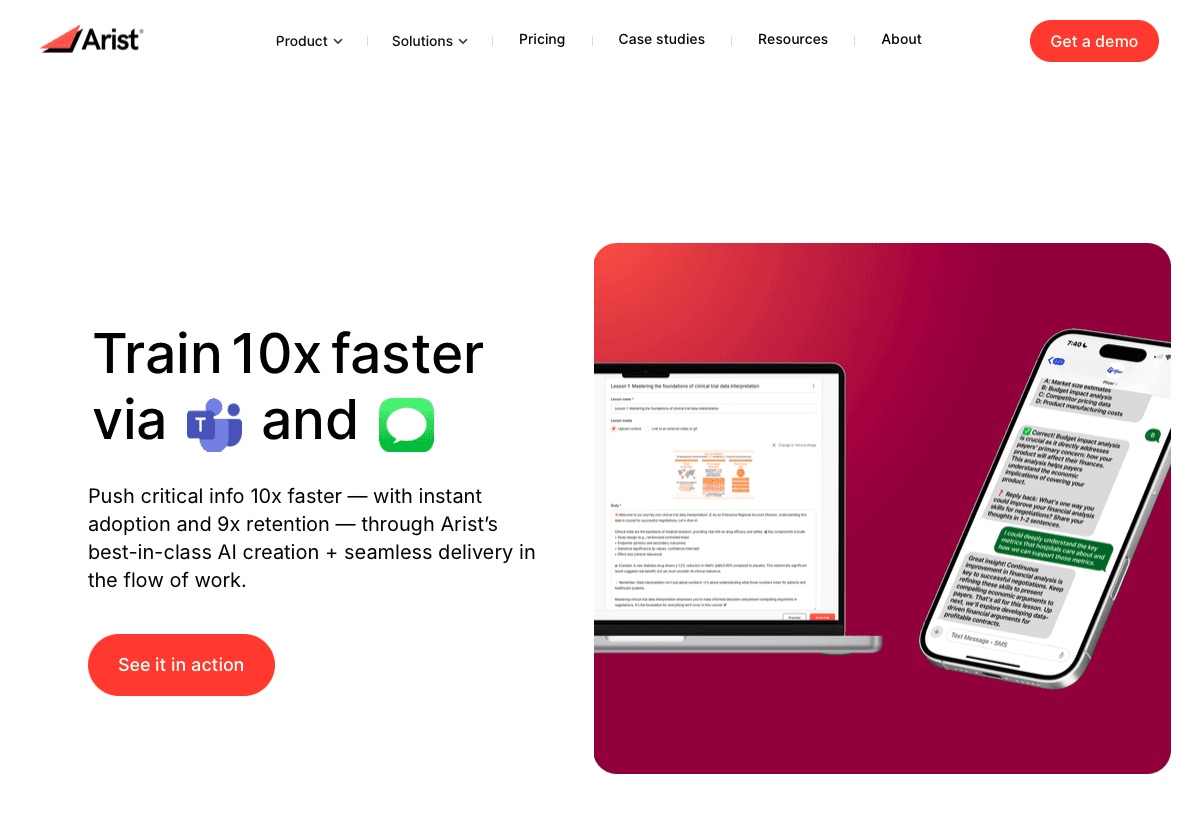
Learning AI concepts is easy; getting an entire workforce to complete training and use those skills at work is the hard part. Arist helps organizations close that gap by delivering AI training as short, chat-based lessons through SMS, WhatsApp, Teams, and Slack, so employees learn inside the tools they already use every day. Instead of long videos and separate portals, Arist sends five-minute lessons, practice prompts, and knowledge checks that fit naturally into the workday, driving completion rates above 95% across desk and frontline teams.
Enterprises use Arist to roll out AI literacy, prompt engineering, compliance, onboarding, and sales training across global, controlled, and distributed workforces without slowing teams down. Built-in AI automates needs analysis, course creation, delivery, reinforcement, and reporting, giving HR, L&D, and enablement teams a faster way to build skills at scale. Trusted by companies like Microsoft, Pfizer, and Ford, Arist turns AI training from a one-time course into a habit that sticks. For organizations that want AI skills to move beyond certificates and into daily work, Arist offers a practical path forward.
FAQs
What's the difference between AI certificates and professional certifications?
Certificates confirm course completion and basic competency, while professional certifications require formal exams, ongoing education, and accreditation.
Can frontline workers without computer access take AI training?
Yes, SMS and mobile-first delivery through WhatsApp, Teams, or Slack works for retail staff, field sales teams, and manufacturing workers who don't have regular desktop access.
What should I look for when choosing an AI course for my career?
Match the course to your goal, pick practical applications and prompt engineering for workplace AI literacy, or programming-focused courses for building AI systems, and focus on hands-on practice over video lectures with certificates from recognized providers like Google, Microsoft, or IBM.
Final thoughts on building AI literacy
The AI skills gap is real, but closing it does not require a technical background or weeks of study. Free courses from Google, Microsoft, and IBM make it easy to learn the basics, yet real progress only happens when people finish what they start and apply it on the job. That’s where Arist fits in, providing AI training courses that turns AI literacy into short, practical lessons delivered inside the tools teams already use, so learning actually happens during the workday. When AI training shows up consistently and leads to a completed certificate and real usage, it compounds over time. Teams that want AI skills to stick use a modern training approach like Arist, because career growth and business impact come from daily practice with AI, not abstract knowledge about how the technology works.
Jasper Ng
Bring
real impact
to your people
We care about solving meaningful problems and being thought partners first and foremost. Arist is used and loved by the Fortune 500 — and we'd love to support your goals.
Curious to get a demo or free trial? We'd love to chat: