Best AI Agent Platforms for Sales Training and Enablement (December 2025)
Most sales training falls flat because reps never open the tools built to support them. AI orchestration for sales changes this by delivering short, timely lessons through the messaging channels your team already checks throughout the day. After reviewing leading AI agent platforms, we break down which options handle the full workflow with minimal friction and which ones still rely on manual steps that slow progress.
TLDR:
AI agents automate sales training end-to-end, from gap analysis to delivery and analytics
Some modern tools achieve 95%+ adoption by delivering training inside Teams, Slack, and SMS
Traditional systems require separate logins, reducing engagement to under 30%
Multi-agent orchestration cuts training deployment time from weeks to hours
Modern solutions automate sales enablement for Microsoft, Eli Lilly, and other enterprises
What Are AI Agents for Sales Training and Enablement?
AI agents for sales training are autonomous systems that handle enablement tasks from start to finish. Unlike basic AI assistants that answer questions or generate one-off content, true agents can plan learning pathways, create personalized content, schedule delivery, and adapt based on how reps perform.
A chatbot might answer "What's our pricing model?" but an AI agent identifies which reps struggle with pricing, builds a targeted lesson sequence, delivers it through their preferred channel, and adjusts reinforcement based on quiz results.
The key difference is orchestration. Agentic AI systems coordinate multiple specialized agents (one for needs analysis, another for content creation, another for delivery) to automate your entire enablement workflow without manual handoffs.
How We Assessed AI Agent Systems for Sales
We assessed each system against a set of core capabilities critical to supporting sales at scale.
Multi-agent orchestration: Whether the system uses specialized AI agents that work together autonomously, or relies on single-purpose tools requiring manual coordination.
Delivery channel flexibility: Can it reach reps in SMS, Teams, Slack, or WhatsApp, or does it require separate app logins?
Content creation speed: How quickly teams can launch new training from existing materials.
Behavioral reinforcement mechanisms: Spaced repetition, adaptive pathways, and performance-based follow-ups, plus integrations with HRIS and sales tools that allow automated enrollment and analytics.
This evaluation relies on publicly available product information, vendor documentation, and published capabilities. We conducted no controlled testing or hands-on trials.
Arist
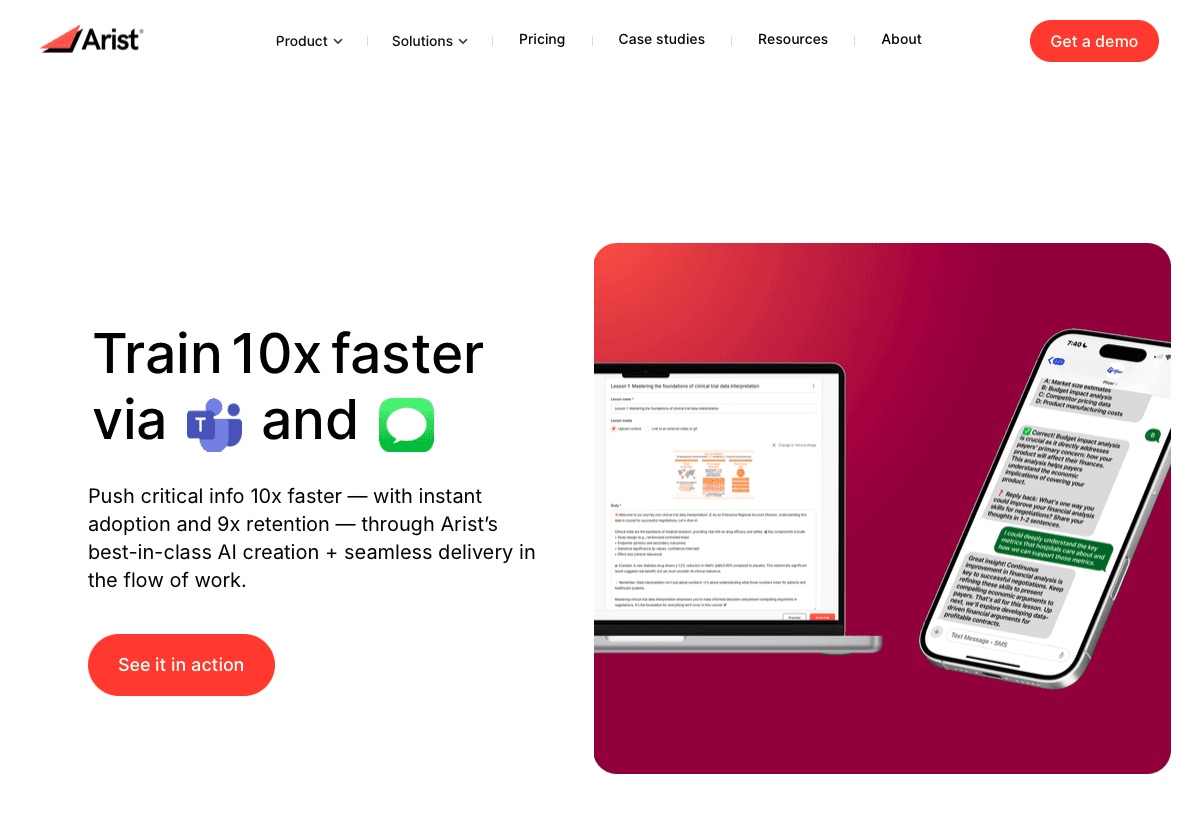
Arist uses six specialized AI agents to automate sales training from gap analysis to outcomes measurement. The Teammate Agent coordinates the workflow while the Needs Analysis Agent identifies skill gaps, the Creator Agent builds personalized microlearning, the Referencing Agent validates accuracy, the Routing Agent schedules adaptive delivery, and the Analytics Agent measures business impact.
Training deploys directly inside Teams, Slack, SMS, and WhatsApp without separate logins or downloads. This approach drives adoption above 95%, compared to typical LMS engagement under 30%. Microsoft achieved 7× higher engagement while Eli Lilly deployed training 10× faster and increased satisfaction from 20% to over 80%.
The system converts existing sales content into complete learning sequences within hours. Native HRIS integrations with Workday and SAP SuccessFactors automate enrollment, role-based personalization, and performance-driven reinforcement.
Mindtickle
Mindtickle offers sales readiness software that combines content management, training modules, coaching workflows, and performance analytics.
What They Offer
Content library with version control and distribution tools
Training modules with quizzes and certification tracking
Coaching scorecards and call recording analysis
Sales readiness index dashboards
Good for: Large sales organizations that need centralized content governance and formal certification programs tied to product launches.
Limitation: Mindtickle is primarily consumed through its own web and mobile interfaces, which creates more friction than messaging-native delivery. A Slack app surfaces notifications and deep links into Mindtickle, but training still happens in the Mindtickle environment. Mindtickle does not deliver full learning experiences natively inside SMS, Slack, or Teams threads. Content creation is centered on traditional course authoring and coaching workflows, not on automatically converting long-form documents into complete microlearning sequences.
Bottom line: Mindtickle works as a traditional learning management system focused on sales but lacks the workflow-embedded delivery and AI orchestration that drive high adoption in distributed sales environments.
Axonify
Axonify delivers microlearning and reinforcement training through a mobile app built for frontline workers, using gamification and spaced repetition quizzes.
What They Offer
Mobile app with daily training questions
Gamification mechanics including points and leaderboards
Spaced repetition algorithms for knowledge reinforcement
Manager dashboards for completion tracking
Good for: Organizations with stable device policies where workers have company-issued smartphones and time allocated for app-based training during shifts.
Limitation: Axonify is designed around its own app experience, so learners typically access training in the Axonify interface (web, mobile, or the Axonify app for Microsoft Teams) instead of short, text-first lessons in SMS or Slack threads. That can still introduce more friction than fully message-based delivery. Its AI capabilities focus on personalizing and supporting learning inside the tool, not primarily on automating the conversion of long-form documents into complete microlearning sequences.
Bottom line: Axonify provides structured microlearning through a gamified app but depends on download and login behavior that creates friction for distributed sales teams who need training in their existing communication channels.
Qstream
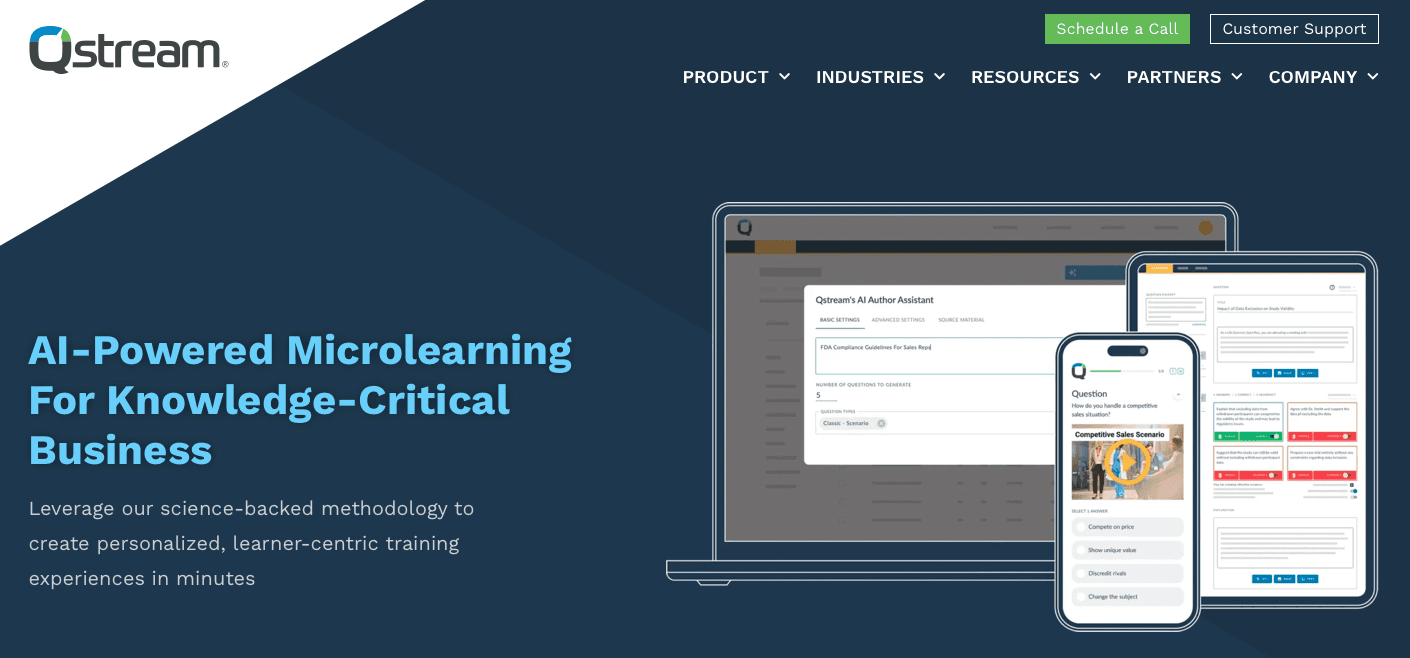
Qstream delivers spaced repetition quizzing to reduce knowledge decay after initial training, with a focus on sales and compliance reinforcement.
What They Offer
Scenario-based questions sent via email or app to test retention
Spaced repetition scheduling aligned with forgetting curve research
Leaderboards and manager dashboards to track quiz results
Question authoring tools for building custom scenario libraries
Good for: Sales organizations with existing training programs that need a structured way to combat post-training knowledge loss.
Limitation: Qstream is built around spaced-repetition question streams, not full multi-format courses. Its AI can generate microlearning questions and challenges from source material, but it doesn’t manage end-to-end enablement workflows (from gap analysis through multi-step lesson paths) in the way agentic platforms do. Questions are typically delivered via email, mobile app, or browser, instead of being natively inside Slack, Teams, or SMS where reps already work.
Bottom line: Qstream helps with retention through quizzes but is not designed to create multi-step training pathways or manage broader sales enablement workflows.
Seismic
Seismic is a sales content management system that organizes collateral, tracks content usage, and provides analytics on material access during deals.
What They Offer
Centralized content repository with tagging and search
Content usage tracking and analytics
CRM integration for content recommendations
Mobile app for accessing sales collateral
Good for: Marketing and sales operations teams managing large volumes of sales collateral across complex product portfolios where content governance and version control matter.
Limitation: Seismic’s roots are in content management, and its learning experience is still centered on web and mobile apps instead of short, message-delivered lessons. Seismic Learning can build paths, coaching, and assessments, but it doesn’t specialize in SMS / chat-native microlearning or multi-agent course creation from long-form documents. Reps still need to engage with Seismic’s own interface (or embedded experiences) instead of receiving most training as push-based messages in Slack, Teams, or SMS.
Bottom line: Seismic surfaces sales collateral but does not specialize in automated training, reinforcement, or behavior change capabilities like agentic learning systems do.
Highspot
Highspot pairs sales content management with training modules and guided selling tools through web and mobile apps.
What They Offer
Content management with AI-powered search and recommendations that surface relevant materials based on deal context
Training modules through Highspot Academy that can be assigned to specific roles or teams
Guided selling tools including pitch templates that walk reps through customer conversations
Analytics dashboards tracking content usage patterns and training completion rates
Good for: Sales enablement teams managing large content libraries who need to connect training directly to the collateral reps use in deals.
Limitation: Highspot is primarily accessed through its own web and mobile experience. A Slack integration surfaces content, training resources, and activity notifications, but reps still consume most training in the Highspot interface instead of short lessons inside chat threads. The training component remains secondary to content management, and AI is focused on content recommendations more than on end-to-end training automation from needs analysis through adaptive pathways.
Bottom line: Highspot functions as a content hub with training features but doesn’t specialize in messaging-native delivery or multi-agent orchestration needed for automated, adaptive sales training at scale.
Gong
Gong is a revenue intelligence system that records, transcribes, and analyzes sales calls to surface insights about customer conversations and deal risks.
What They Offer
Automatic call recording and transcription that captures every customer interaction
Conversation analytics that accentuate keywords, topics, and patterns across calls
Deal insights showing engagement levels and potential risks in the pipeline
Coaching recommendations generated from call analysis data
Good for: Sales leaders who need visibility into customer conversations and want data-driven coaching insights to improve rep performance.
Limitation: Gong analyzes conversations after they happen but doesn't deliver proactive training or create learning content. The system provides coaching recommendations but requires managers to manually act on them. It lacks AI agents that build training pathways, personalize learning sequences, or deliver content through messaging channels where reps consume training between calls.
Bottom line: Gong delivers conversation intelligence for coaching but is not designed to function as a proactive training delivery system that builds skills autonomously.
Why Arist Is the Best AI Agent System for Sales Training
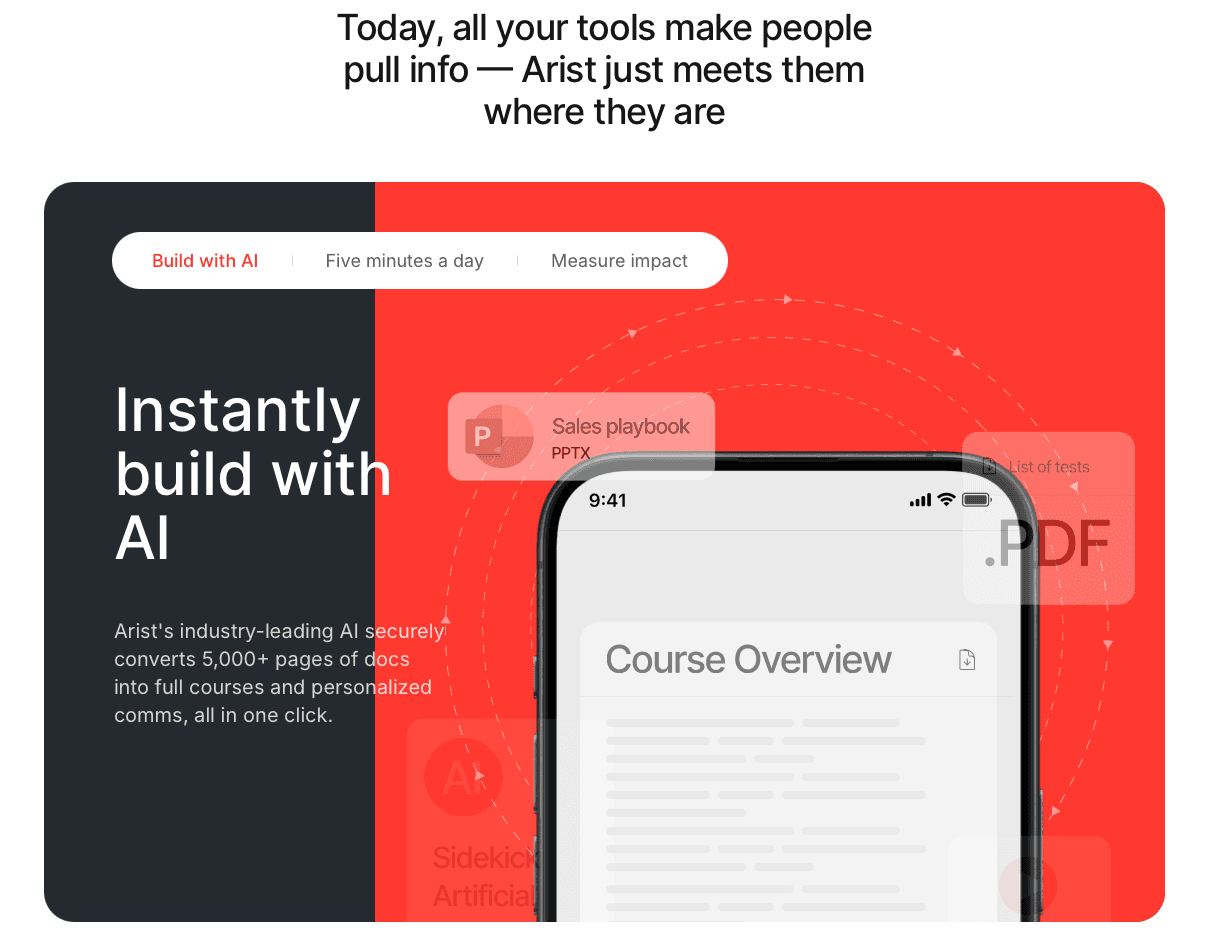
Arist solves the core challenge facing sales enablement teams: training that actually gets completed and drives behavior change. BCG research shows AI agents will change B2B sales by automating repetitive enablement tasks, yet most enterprises struggle to deploy agentic AI at scale.
Arist manages six specialized agents and delivers training inside messaging tools your teams already open dozens of times daily, removing the friction that kills traditional learning programs. Organizations implementing agentic AI report faster decision-making because workflows become automated, not fragmented across tools.
The competitive systems reviewed here require separate logins, manual content creation, or focus on adjacent problems like content management instead of training delivery. Workers are enthusiastic about agentic AI but need solutions that integrate into their workflow.
FAQs
What is the main difference between AI agents and traditional AI tools for sales training?
AI agents autonomously plan, create, deliver, and adapt training workflows without manual intervention, while traditional AI tools require humans to coordinate each step. Agents work together to handle everything from identifying skill gaps to measuring outcomes, replacing fragmented point solutions.
How quickly can you deploy new sales training with an AI agent system?
With AI-driven content generation and messaging-native delivery, you can launch new training sequences in hours or days instead of the weeks or months required by traditional LMS platforms. Eli Lilly achieved 10× faster deployment using agent-based systems.
Can AI agents personalize training for different sales roles automatically?
Yes, agent systems integrate with HRIS data to build adaptive learner cohorts based on role, performance, and behavior, then adjust reinforcement automatically. This removes the manual work of creating and maintaining separate learning paths for each role.
Final thoughts on AI agent solutions for sales training
Effective sales training depends on consistent completion, and AI agent platforms give teams the lift they need by generating content automatically and delivering it through the everyday messaging channels reps already use. The tools covered in this guide span everything from content repositories to conversational analysis, yet only Arist brings together a coordinated set of agents that run the full enablement cycle, from pinpointing gaps to producing lessons to tracking outcomes at scale. As you compare features, focus on which system can support the real habits, constraints, and pace of your distributed sales organization so training actually lands and drives performance.
Jasper Ng
Bring
real impact
to your people
We care about solving meaningful problems and being thought partners first and foremost. Arist is used and loved by the Fortune 500 — and we'd love to support your goals.
Curious to get a demo or free trial? We'd love to chat: